What is a web app, and how is it different from a website?
A website mainly helps people find a business, understand what it offers and decide what to do next.
A web app allows them to do something.
That could mean booking a service, managing an account, accessing member information, tracking stock, processing orders, recording activity or working with live business data.
The difference is useful, but many businesses do not need to choose between a website and a web app. The strongest solution is often a public website and a web application working together as one connected platform.
The website brings people into the business. The web app supports what customers, members, staff and administrators need to do afterwards.
What is a web app?
A web app is software accessed through a web browser.
Unlike a conventional website, it usually responds to the individual user, works with stored information and allows people to complete tasks inside the platform.
Examples include:
- Customer and member portals
- Booking and management systems
- Admin dashboards
- Stock and inventory tools
- Reporting platforms
- Online marketplaces
- Scoring and competition systems
- Internal workflow tools
Users may have their own accounts, permissions, records or dashboards. A customer might see bookings, purchases or account information, while a staff member sees schedules, requests or live activity. Administrators may be able to manage users, content, reporting and the wider system.
A web app can work across mobile phones, tablets and desktop computers. It does not necessarily need to be downloaded through an app store. The important point is not where it comes from, but what it allows people to do.
Where websites and web apps work together
For many businesses, the public website is only the start of the journey.
It helps someone discover the business, understand the offer and decide whether to engage. Once that person becomes a customer, member or user, the web app can support what happens next.
A customer may need to make or change a booking. A member may need to access private information. Staff may need to manage schedules, records or live activity. Management may need reporting and oversight.
Those experiences do not have to sit across several disconnected systems.
They can be planned as different parts of one wider platform, using the same information and supporting the same business.
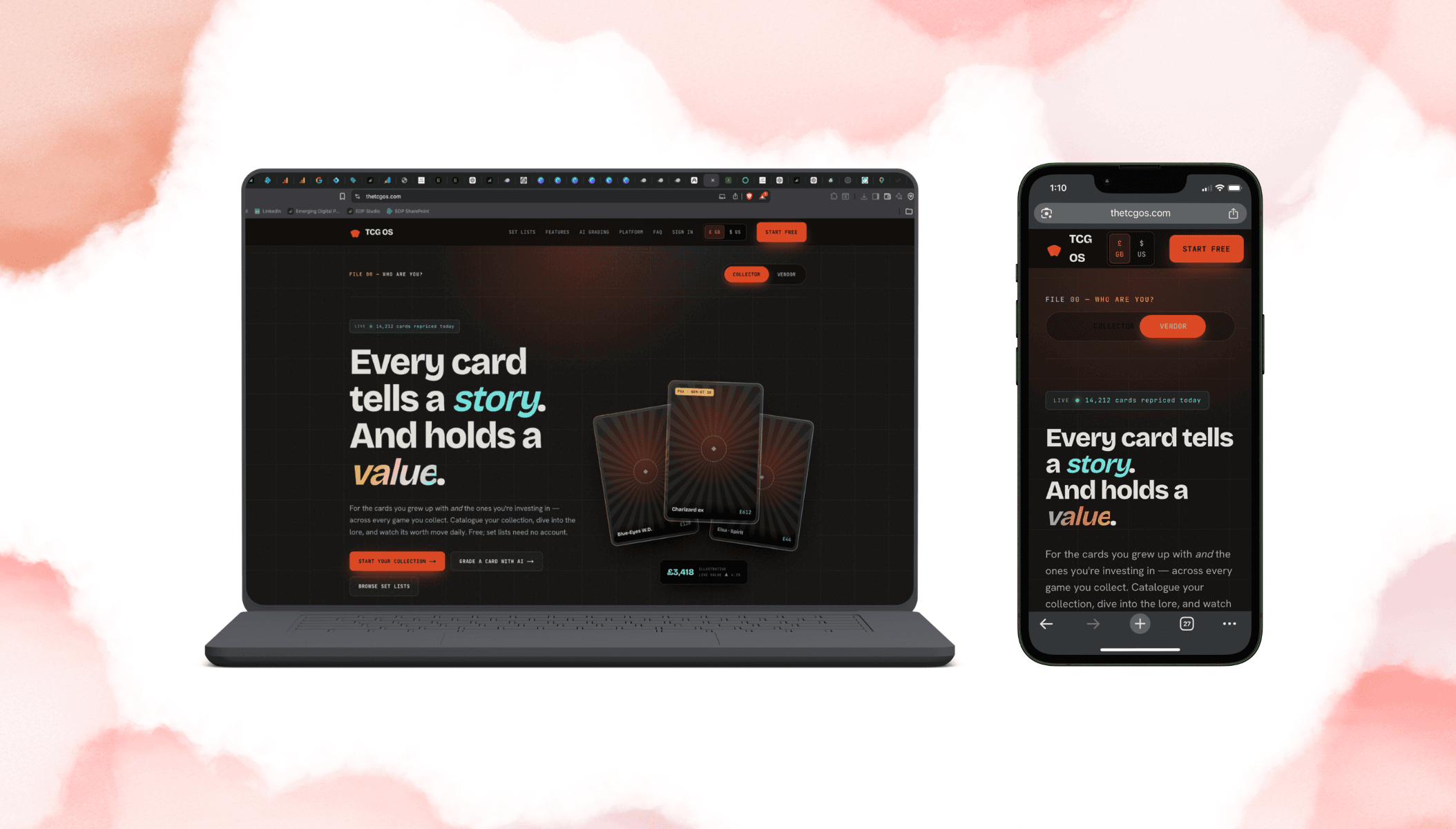
This is how platforms such as The TCG OS work. Public pages help people explore trading cards, sets and games, while logged-in collectors and vendors have access to their own tools, records and activity.
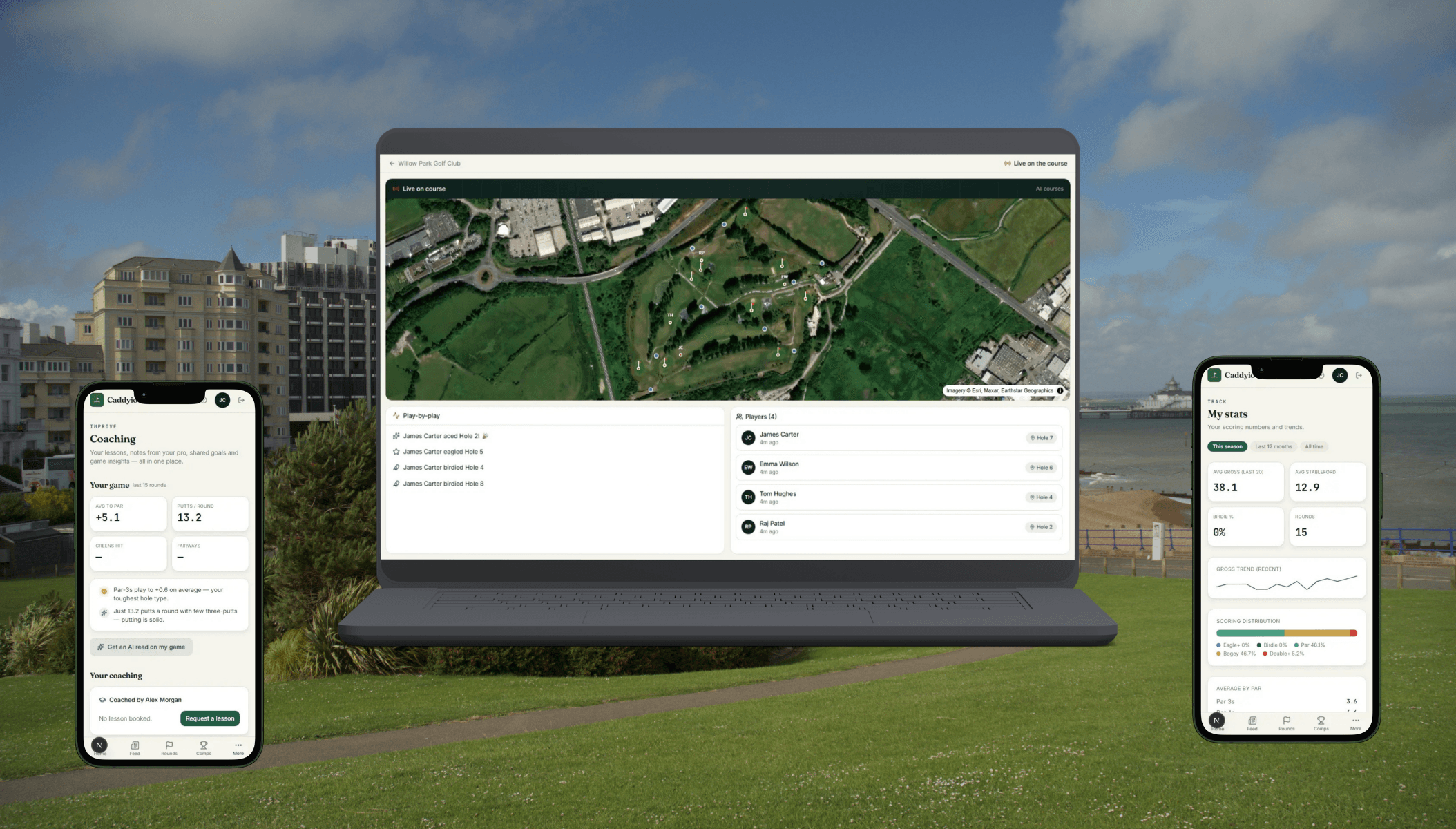
We took a similar approach with Horam Park Golf Club. The public website helps visitors understand the course, facilities and memberships, while private member access and connected club tools support the experience after someone logs in.
The point is not simply to attach a login area to a website.
It is to connect discovery, customer activity and business administration so they support one another.
How can a web app help a business?
A web app becomes valuable when the business needs its digital setup to support more than information and enquiries.
It may help customers or members:
- Create and manage their own accounts
- Make bookings, orders or applications
- View records, progress or activity
- Access private information or services
- Complete tasks without needing to email or call
It may help staff and administrators:
- Manage users, bookings and requests
- See live activity in one place
- Reduce repeated data entry
- Replace spreadsheets and long email chains
- Control permissions and access
- Produce reports and track useful information
- Connect processes that currently sit across several tools
This can improve the customer experience while also making the business easier to manage.
For example, a customer may see a straightforward booking journey, while staff receive the information they need automatically. A member may update their own details, while administrators retain control over access and records. Management may see reporting that would previously have required information to be gathered manually.
A web app is therefore not only a customer-facing tool. It can support the processes behind the business as well.
The need often becomes clear when:
- Staff are copying the same information between different places
- Customers need to contact the business to complete simple tasks
- Members or clients need private access to information
- Bookings, payments and customer records do not connect properly
- Existing software does not match the actual workflow
- Manual processes are becoming slow or unreliable
- The business needs its own portal, dashboard or management system
The starting point should be the problem, not the technology.
A business does not need a web app because it sounds more advanced. It needs one when a better digital process could remove friction, improve the experience or give the team more control.
Why build a custom web app?
Off-the-shelf software can work well when a business follows a standard process.
The problem comes when the business has to change the way it works to fit the software.
A custom web app can be shaped around the actual workflow instead.
That does not mean every project needs to become a huge platform. A custom solution could be a focused customer portal, a booking system, a member area or an internal dashboard. It could also grow into a wider platform involving several user types, integrations and live data.
The functionality can be as simple or as developed as the business needs.
Different users can also have different experiences within the same system. Customers may need simplicity. Staff may need visibility and control. Administrators may need permissions, reporting and management tools.
A custom platform can bring those needs together without forcing everyone through the same interface.
It can also connect with software the business already uses.
A new web app does not necessarily need to replace every payment provider, calendar, CRM, stock system or back-office tool. It may be more useful to connect those systems and create a clearer layer around them.
That might mean:
- Passing bookings into an existing calendar
- Connecting customer accounts with a payment platform
- Pulling stock data from an inventory system
- Updating a CRM after a customer completes an action
- Showing information from several systems in one dashboard
- Giving customers a branded experience while existing tools continue working behind it
Good web app development starts by understanding what already works, where the friction sits and what the business actually needs the system to do.
How EDP approaches connected platforms
We start with the people and processes involved.
That means understanding what the public needs to see, what logged-in users need to do, how staff currently manage the work, what information is involved and which existing systems may need to connect.
The visual interface matters, but it is only one part of the project.
A useful web app also needs:
- Clear user journeys
- Reliable data
- Sensible permissions
- Logic that reflects the real process
- An administration area the team can manage
- Enough flexibility to grow with the business
This is where our Web Design and Web App Development work come together.
We can plan the public website, private user experience and internal administration as one connected project rather than treating them as separate systems.
The public website can support discovery, content and search visibility. The web app can support the customer relationship and the work that follows.
That might result in a focused portal, a booking and membership platform or a more developed system involving dashboards, integrations, live activity and several user types.
The scope should be built around the problem, not a fixed package.
Have an idea for a portal, platform or business tool?
Tell us what your customers, members or team need to be able to do.
We can help you work out whether the right solution is a website, a custom web application or a connected platform that brings both together.
Frequently asked questions
A web app is software accessed through a browser that allows users to complete tasks, manage information or interact with a personalised account or system.
Want a hand with this?
We help businesses across Eastbourne and East Sussex turn this kind of thinking into real results.
Start a conversation