Signs your business needs a new website
A business website does not usually fail all at once. It becomes less useful over time.
The business changes, services develop, customers expect more, competitors improve their websites and search behaviour moves on. Before long, the site that once felt good enough starts creating friction.
That friction can show up in different ways. Maybe the website is not helping you win enough enquiries or sales. Maybe people only find you when they already know your business name, but not when they search for the services you offer. Maybe customers keep asking questions the website should already answer. Maybe the site looks decent, but the systems behind it are messy, disconnected or slowing the business down.
A new website is not always the answer. Sometimes a business only needs better content, stronger SEO foundations, clearer calls to action or a few focused improvements. But when the same problems keep appearing across visibility, trust, enquiries and day-to-day operations, it may be time to rethink the website properly.
Your website is not helping you win enough enquiries or sales
A website does not need to do everything, but it should help move people closer to action.
For some businesses, that action is an enquiry. For others, it might be a booking, a purchase, a membership sign-up, a phone call, a quote request or a consultation.
If people are visiting the website but not taking the next step, the issue may be more than how the site looks. The pages may not explain the offer clearly enough. The calls to action may be weak. The proof may not be strong enough. The journey may feel unclear. The website may be giving people information, but not enough confidence.
This is especially important for service businesses. A potential customer often needs to understand what you do, whether it fits their problem, what the process looks like and why they should trust you before they enquire.
If the website does not help with that, it is not doing enough.
We explore these wider elements in What makes a good business website?
People only find you when they already know your name
A common sign that a website is underperforming is when it only appears in Google for branded searches.
In other words, people can find you when they search your business name, but not when they search for what you actually do.
That might sound like an SEO issue, and it often is. But it is also a website structure and content issue.
If your website does not have clear service pages, useful headings, strong location signals, enough content depth and internal links between relevant pages, search engines have less to work with. The site might look fine, but it may not be giving Google enough clear information to understand which searches it should appear for.
This is where a website rebuild can become much more strategic.
Rather than guessing which pages to create or rewriting content based only on opinion, the rebuild can be shaped around proper keyword research, mapping and tracking. That might mean reviewing 100 or more relevant search terms, grouping them by service, location and intent, then using that data to decide which pages need to exist, what each page should focus on and how the content should be structured.
This does not mean forcing keywords into pages awkwardly. It means using search data to make better decisions.
For EDP, this is why SEO is part of the website planning conversation. We do not see search as something that only gets added after launch. The structure of the website, the way services are grouped, the content on each page and the internal links all influence how competitive and visible the site can become.
For more on the common reasons behind poor visibility, read Why your business isn't showing up on Google.
Your service pages are too thin or unclear
Service pages are often where a business website wins or loses trust.
If each service only has a short paragraph and a contact button, visitors may not have enough information to make a decision. They might understand that you offer the service, but not what it involves, who it is for, what problems it helps with or why you are the right choice.
Thin service pages can also hold back search visibility. If a page is vague, generic or too short, it gives search engines and AI search tools less useful context about the business.
A stronger service page should answer the questions people are likely to have before they enquire. It should explain the service clearly, show where it fits, include relevant proof where possible and make the next step obvious.
That does not mean every page needs to be overloaded with text. It means the important pages need enough substance to be useful.
The website does not work properly with the rest of the business
This is one of the bigger signs that a business may need more than a visual refresh.
A website might look acceptable from the outside, but behind the scenes it may not connect properly with how the business actually works.
Bookings might be handled manually when they could be streamlined. Orders, stock, memberships or customer information might sit across too many disconnected tools. Staff may be copying information from one place to another. Customers may need to email or call for things that should be easier to do online.
At that point, the website is not only a marketing issue. It becomes an infrastructure issue.
This is an area EDP is focusing on more heavily because many businesses do not only need a better-looking website. They need digital tools that work properly around the website. That might include booking systems, portals, member areas, dashboards, back-end tools, customer areas or other bespoke functionality.
The goal is not to add complexity for the sake of it. It is to make the website and the systems around it support the way the business actually operates.
The website is difficult to update, manage or grow
Sometimes the problem is not only the website itself. It is the setup around it.
If simple changes take too long, fixes are difficult to get done or your website provider is hard to reach, the website can start to add stress instead of removing it.
This becomes a real problem when the business is trying to move quickly. You may need to update services, publish content, add case studies, create landing pages, change team information, improve calls to action or fix small issues. If every update becomes a slow process, the website starts holding the business back.
There can also be a knowledge gap. Some businesses feel locked out of their own website or are made to feel that simple changes are more complicated than they need to be. Others end up with a website that technically exists, but is not easy to manage, improve or expand.
Reliable website management matters because the site will keep changing after launch. It should be built and supported in a way that helps the business keep improving, not one that adds more work, confusion or frustration.
The website no longer reflects the business
A website can become outdated even if it still works technically.
The business may have grown, changed its services, improved the quality of its work or moved towards a different type of customer. If the website still reflects the older version of the business, it can create the wrong impression.
This happens a lot with businesses that have developed gradually. The website was right at the time, but the offer has moved on. Stronger work is missing. New services are not properly explained. The tone no longer fits. The visuals feel behind the level the business is now operating at.
That gap can affect trust. People are often judging whether a business feels credible before they ever speak to someone.
A good website should represent the business as it is now, not as it was several years ago.
The website is not ready for AI Search
AI search is changing how people find and compare businesses.
People may still use Google in the traditional way, but they may also ask AI tools for recommendations, comparisons, summaries and answers before they ever click through to a website.
That makes website clarity more important.
AI search tools need clear information to understand what a business does, who it helps, where it works and why it can be trusted. If the website is vague, thin, outdated or poorly structured, there is less useful information for those systems to work with.
This does not mean a new website will automatically make a business appear in AI-generated answers. But a stronger website gives people, search engines and AI tools a clearer picture of the business.
For EDP, this is now part of the way we think about Web Design. A website should not only look credible. It should help the business become easier to understand across search, AI Search Visibility and the wider web.
You can also explore this further in What does AI search say about your business?
You keep answering questions the website should answer
Some questions will always come up in sales conversations. That is normal.
But if people regularly ask basic questions that the website should already explain, the content may not be doing enough.
That might include what services you offer, who you work with, where you are based, how the process works, what happens after someone enquires, how pricing works or whether you can help with a specific type of problem.
A website should not replace every conversation, but it should make those conversations easier. Good website content helps people arrive with a better understanding of the business. It can also filter out poor-fit enquiries earlier and give stronger-fit customers more confidence before they get in touch.
For more on the role this plays in visibility, read Why useful content helps your website get found online.
So, do you need a new website?
Not every issue means you need a full rebuild.
If the website is mostly working, smaller improvements may be enough. That could mean rewriting key pages, improving internal links, adding stronger service content, updating metadata, improving calls to action or adding proof such as case studies and reviews.
But if the website is not helping generate enquiries, only appears when people already know your name, is difficult to update, does not support search, gives AI search tools little to work with or no longer fits how the business operates, a new website may be the better long-term decision.
The best place to start is by understanding what the current website is and is not doing.
From there, it becomes easier to decide whether you need a few focused improvements, better content, stronger search foundations, improved website management or a complete rebuild.
Not sure what your current website needs?
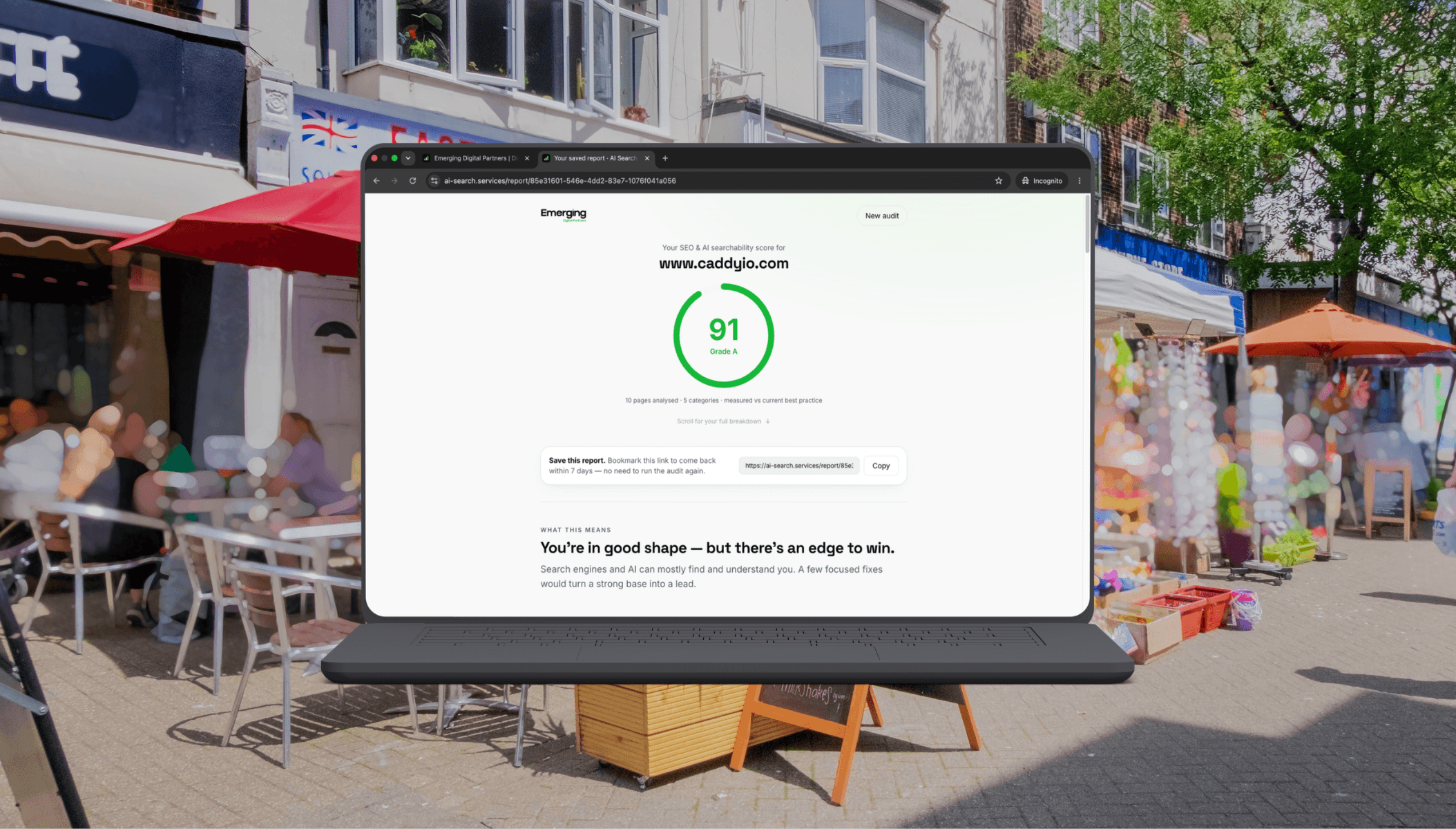
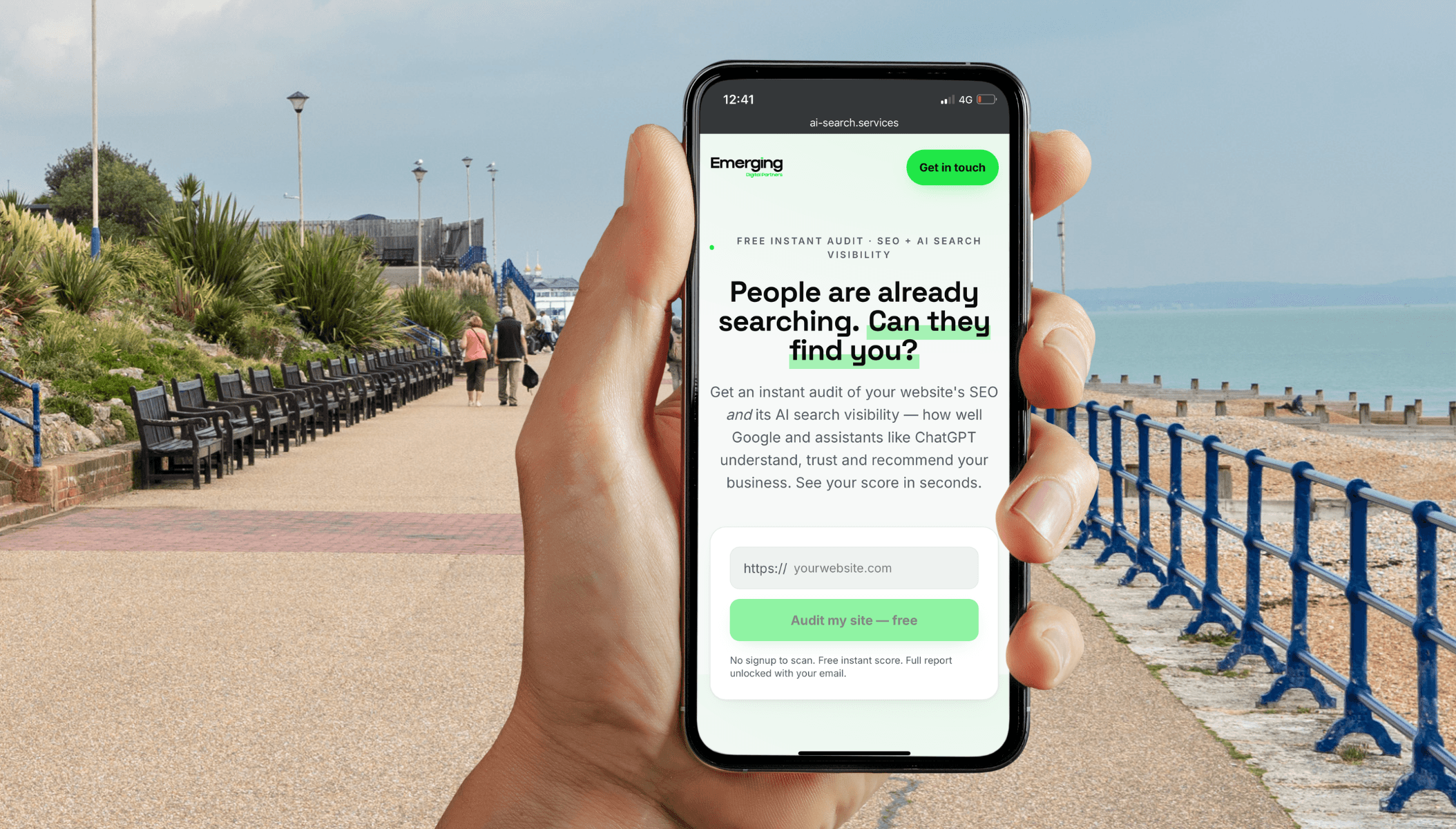
If you already have a website and are unsure whether it needs small improvements or a more complete redesign, our free instant SEO and AI Search audit can give you a useful starting point.
It checks technical SEO, on-page content, AI search visibility and key areas that may be holding the site back.
That can help you understand whether your website needs better content, stronger search foundations, clearer structure or a more complete rebuild.
Frequently asked questions
Common signs include poor enquiry performance, low non-branded search visibility, unclear service pages, outdated content, difficult website management and systems that no longer support how the business operates.
Want a hand with this?
We help businesses across Eastbourne and East Sussex turn this kind of thinking into real results.
Start a conversation