Why web design should start with structure, not visuals
It is easy to start a website project by thinking about how it should look.
Colours, fonts, images, animations and layouts are usually the first things people picture when they think about web design.
Those things matter.
But they should not be where the project starts.
Before a website can look right, it needs to make sense. It needs the right pages, the right structure, the right messages and a clear path for people to follow.
A good-looking website can still be confusing if the structure behind it is weak.
For EDP, this is why web design starts with what the website needs to do, not just how it should look.
Structure decides how people understand the business
A website is often one of the first places someone goes to understand a business.
They may already know the name. They may have found it through Google. They may have clicked through from social media, an email, a referral, a local listing or an AI-generated answer.
Wherever they come from, they are usually trying to work something out.
- What does this business do?
- Is it relevant to me?
- Can I trust it?
- What should I do next?
The structure of the website helps answer those questions.
If the main services are hidden, grouped badly or explained too thinly, people have to work harder than they should. If the navigation is unclear, visitors may not find the information they need. If every page feels like it is saying the same thing, the website can look professional but still feel vague.
That is why structure matters before design.
The website needs to be organised around how people actually understand the business, not just around what looks good on a homepage.
Visuals cannot fix unclear content
Strong visuals can make a website feel more professional, but they cannot solve every problem.
If the service information is unclear, the website will still be unclear.
If the copy does not explain what the business does, the design can only do so much.
If the page does not guide people towards a useful next step, better imagery will not fix the journey.
This is where some website projects go wrong. Too much attention goes into the appearance of the site before the content and structure have been properly worked through.
The result can be a website that looks modern but does not properly support the business.
Good web design should bring content, layout and visuals together. The visual direction should support the message, not cover up the lack of one.
A structured website supports better service pages
For many businesses, service pages are the most important part of the website.
They are where people decide whether the business can help them.
A strong service page should do more than briefly describe the service. It should explain who it is for, what problem it helps with, what the process looks like and why the business is a credible choice.
That becomes much easier when the website structure has been planned properly.
For example, a business might have several services that need separate pages because people search for them separately. Another business might have services that make more sense grouped together because that is how customers understand the offer.
There is no single structure that works for every business.
The right structure depends on the services, the audience, the search demand and the way people are likely to compare their options.
That is why we do not see web design as simply creating a set of nice-looking pages. The page structure needs to match the business and the way people actually make decisions.
Structure helps SEO from the start
Search visibility is not only affected by what happens after a website goes live.
A lot of the groundwork happens during the planning stage.
The pages you choose to create, the way services are named, the headings used on each page, the internal links between pages and the depth of information available all help search engines understand the site.
If the structure is weak, SEO work can become harder later.
For example, if a business wants to be found for several different services but only has one general services page, there may not be enough depth for those searches. If local relevance is important but the website barely explains where the business works, that can limit how useful the site is for local search.
A clear structure gives SEO something stronger to build on.
It helps the website explain what the business does in a way that works for both users and search engines.
We explore some of the other common barriers in Why your business isn't showing up on Google.
Structure also matters for AI Search Visibility
AI Search Visibility is another reason website structure has become more important.
AI-powered search tools need clear, consistent information to understand a business. They look for signals that help them work out what the business does, where it operates, who it helps and why it might be trusted.
A website with thin pages, vague service descriptions and unclear structure gives those systems less to work with.
This does not mean a structured website will automatically appear in AI-generated recommendations.
But it does mean the website is giving people, search engines and AI tools a better foundation.
For EDP, this is now part of how we think about Web Design. A website should not only look credible to a human visitor. It should also make the business easier to understand across the wider search environment.
You can learn more about this through our AI Search Visibility service or read What does AI search say about your business?.
Structure makes the website easier to grow
A good website should not only work on launch day.
It should also be able to grow with the business.
That might mean adding new service pages, publishing articles, creating campaign landing pages, adding case studies, building out FAQs or introducing more advanced functionality later.
If the original structure is rushed, those additions can become messy.
New pages get bolted on wherever they fit. Content starts overlapping. Internal links become inconsistent. The site becomes harder to manage and harder for users to follow.
A well-structured website gives the business more room to grow.
This is especially important for businesses that plan to invest in SEO, AI Search Visibility, content, email outreach or wider marketing over time. Those activities all need a website that can support them properly.
The planning, flexibility and functionality involved can also affect the project price. We explain this further in How much does a website cost in the UK?.
Visual design still matters
Starting with structure does not mean visuals are less important.
The way a website looks has a big impact on how people feel about the business.
Good visuals can make a business feel more professional, more current and easier to trust. Photography, video, spacing, typography, colours and movement can all shape how the website is experienced.
The point is that those decisions work better when they are built around a clear structure.
Once the purpose of each page is understood, the design can support it properly.
A homepage can guide people towards the right areas. A service page can make the offer easier to understand. A case study can highlight the right proof. A contact section can make the next step feel clear.
The visuals should bring the structure to life.
They should not be asked to fix a website that has not been planned properly.
How EDP approaches website structure
When we plan a website, we want to understand what the business actually needs the site to support.
That usually means looking at the services, the audience, the current website, search demand, existing content, future marketing plans and any functionality the business might need.
Sometimes the right answer is a simple website with clear pages and a straightforward enquiry route.
Sometimes the website needs more depth, with separate service pages, better content, SEO foundations, case studies, visual assets or functionality such as bookings, memberships, portals or other bespoke tools.
The point is not to make every website bigger than it needs to be.
The point is to make sure the structure fits the job.
That is where a website becomes more useful. It is not just a designed page or a polished homepage. It is a proper digital foundation for the business.
A better place to start
The best place to start a website project is not with a colour palette or a homepage mock-up.
It is with a clearer understanding of what the website needs to help people do.
- What information do they need?
- Which services need explaining?
- What proof will help them trust the business?
- What searches should the website support?
- What action should people take next?
- What might the business need the website to support later?
Once those questions are clearer, the visual design has something stronger to build around.
That is why web design should start with structure, not visuals.
A website still needs to look good.
But more importantly, it needs to make sense.
Not sure whether your website structure is working?
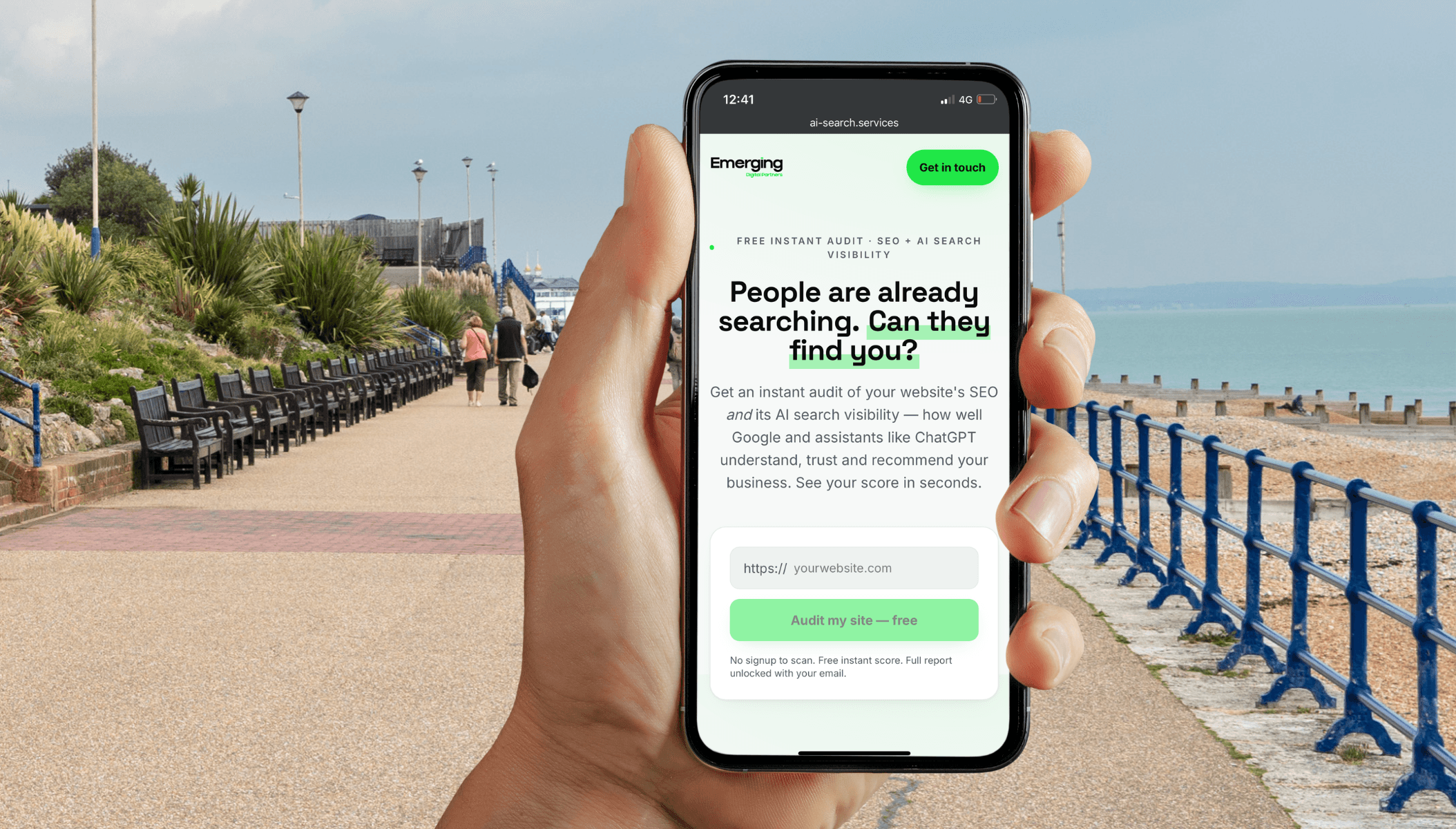
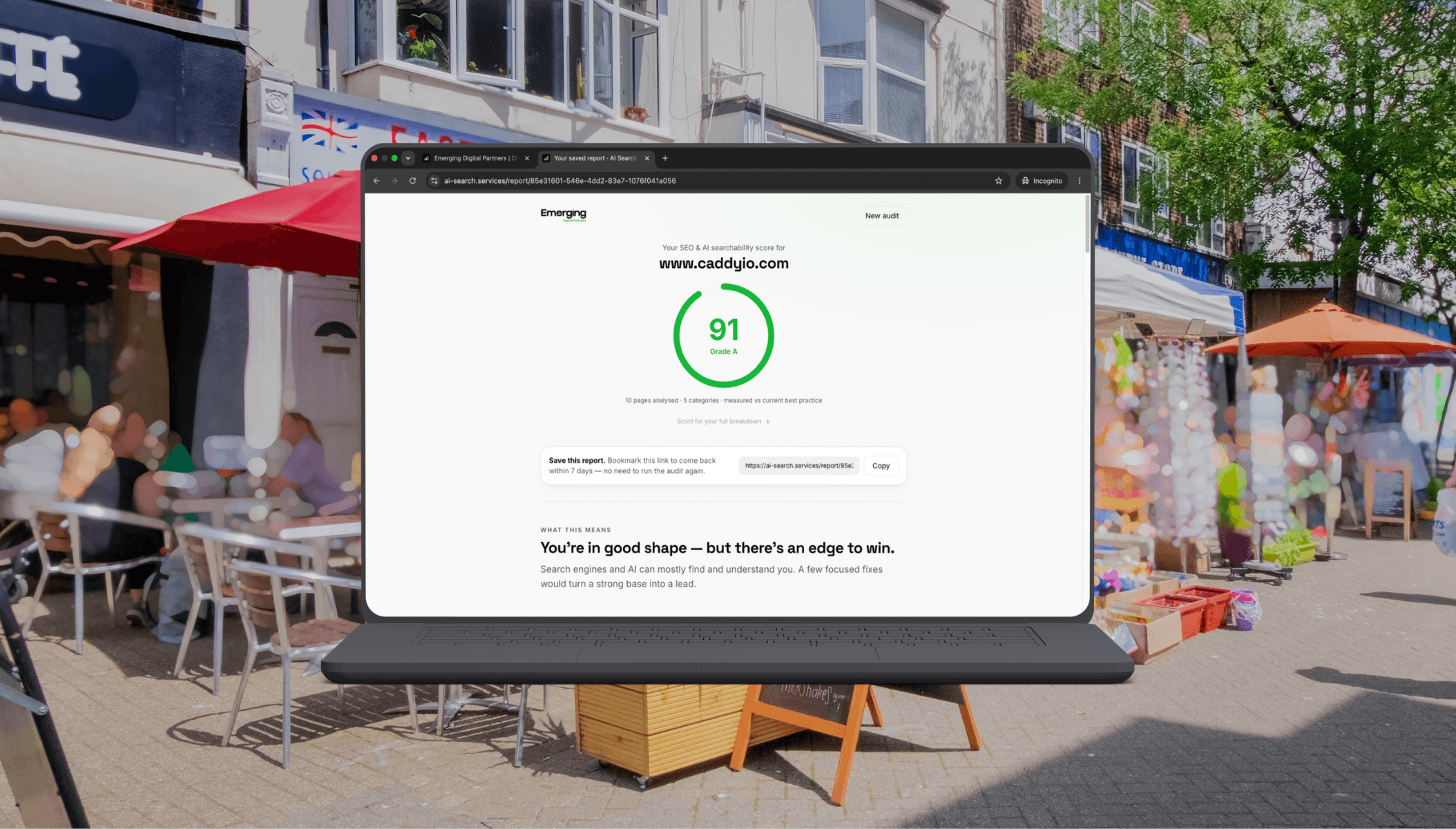
If you already have a website, our free instant SEO and AI Search audit can give you a useful starting point.
It checks technical SEO, on-page content, AI search visibility and key areas that may be holding the site back.
That can help you understand whether your website needs small improvements, stronger content, better search foundations or a more complete redesign.
Frequently asked questions
Structure determines which pages are needed, how information is organised and how visitors move through the website. Without that foundation, a visually polished site can still be confusing.
Want a hand with this?
We help businesses across Eastbourne and East Sussex turn this kind of thinking into real results.
Start a conversation